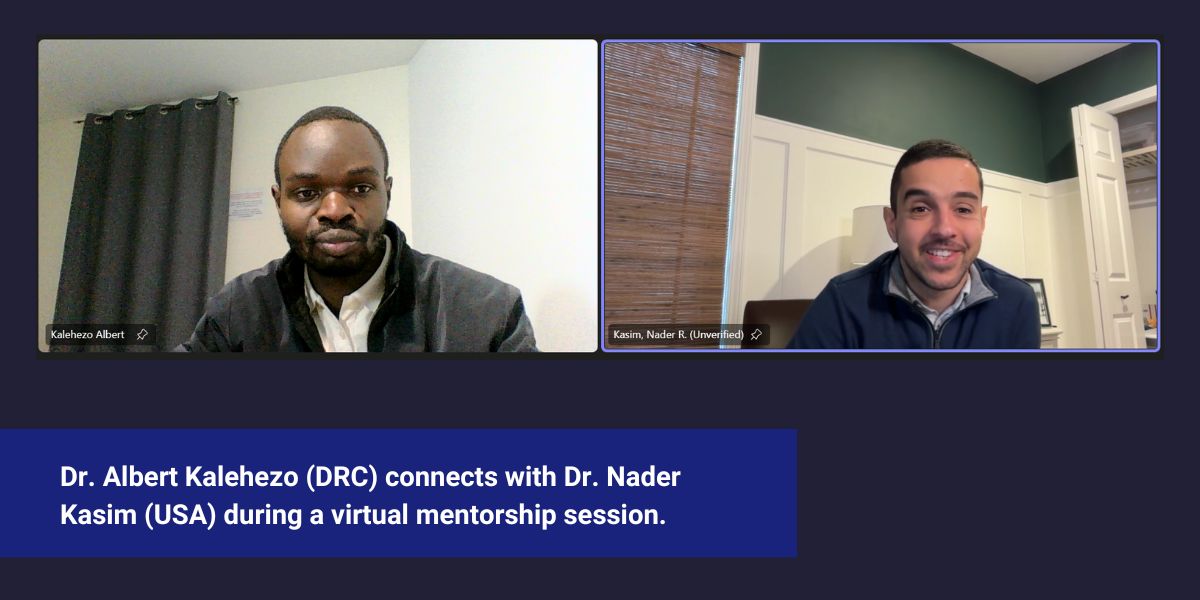
When Dr. Albert Kalehezo began caring for young people at the Kivu Diabetes Center in the Democratic Republic of Congo, he quickly realized he needed deeper, specialized expertise.
“I am a medical doctor with general knowledge of diabetes, but I initially had very limited exposure to pediatric care,” Albert said. “I sought opportunities to strengthen my skills so I could provide optimal care for children living with diabetes.”
That search for knowledge led him to the Life for a Child Mentorship Program, an initiative launched in partnership with the International Society for Pediatric and Adolescent Diabetes. Through the program, Albert was paired with Dr. Nader Kasim, a pediatric endocrinologist based in the United States.
What followed was six months of regular virtual discussion, shared problem-solving, and practical learning that transformed how Albert manages type 1 diabetes in his clinic.
Translating guidelines into local reality
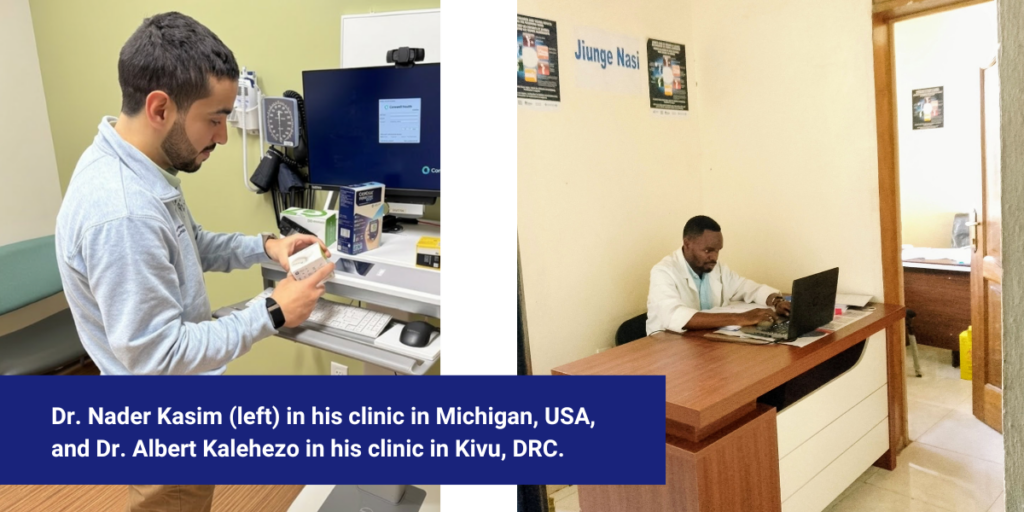
“Over our six months working together, my focus was helping Dr. Albert translate standard diabetes guidelines into practical, effective care for his patients,” Nader said.
Together, they tailored clinical protocols to fit local family routines. Albert began teaching families how to adjust doses based on meal size, categorized as large, medium, light, or small. They also introduced protocols for treating diabetic ketoacidosis and established group messaging and video recordings to make educational resources accessible.
“Many concepts that once felt abstract became clear,” Albert said. “Nader understood my working environment very well.”
“Insulin, My Best Friend”
The partnership’s most creative breakthrough came when Albert set out to help young people and their families remember essential daily routines, he composed a song titled “Insulin, My Best Friend.”
Set to a catchy melody, the lyrics turned management guidance into an engaging memory aid. Lines like “Taking my insulin every day, it’s what keeps me alive” help families remember concepts long after they leave the clinic.
A lasting connection
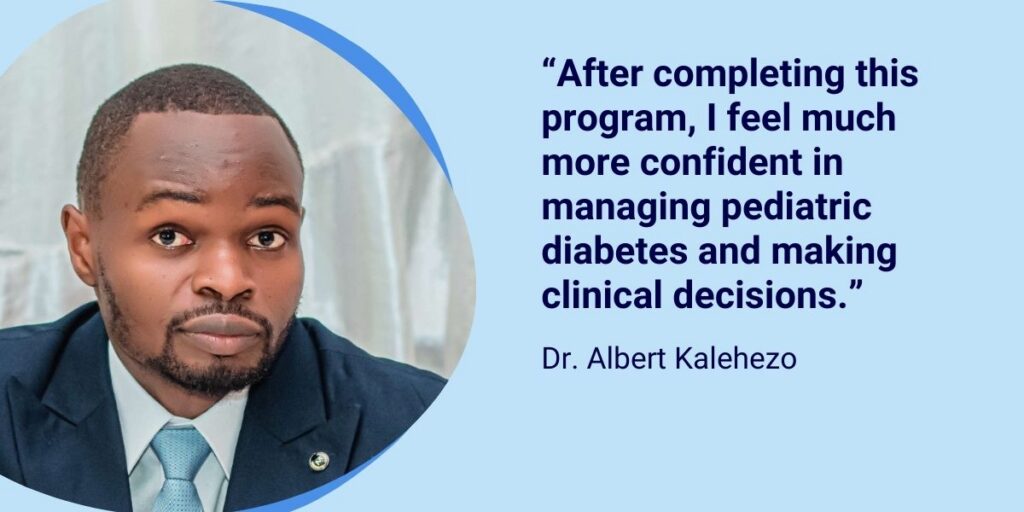
For Albert and Nader, the six-month mentorship yielded far more than updated clinical protocols.
“Seeing Dr. Albert’s clinical confidence grow has reinforced the immense value of sharing medical knowledge,” Nader said. “I stepped into this program hoping to offer useful guidance, but I am walking away having gained an exceptional colleague and a true friend.”
Albert agrees that the connection extends far beyond the program itself: “Beyond mentorship, I gained a friend whom I can still contact for advice. We both hope to meet in person one day.”
Find out more about the Life for a Child Mentorship Program.