What does success look like?
At Life for a Child, we work every day to help children and young people living with type 1 diabetes access the care and support they need. But meeting the needs of every child will also require strong health systems that can deliver high-quality care at scale.
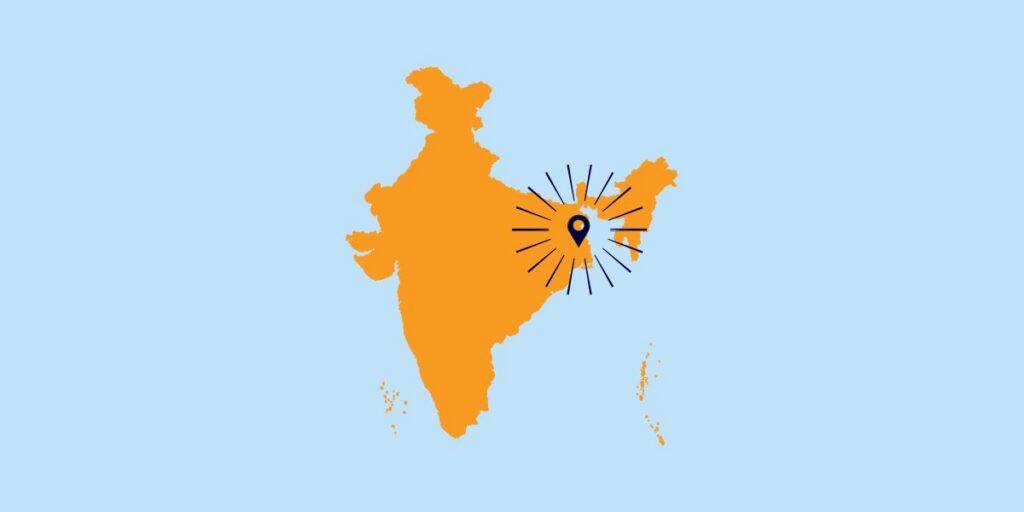
West Bengal is demonstrating what that can look like.
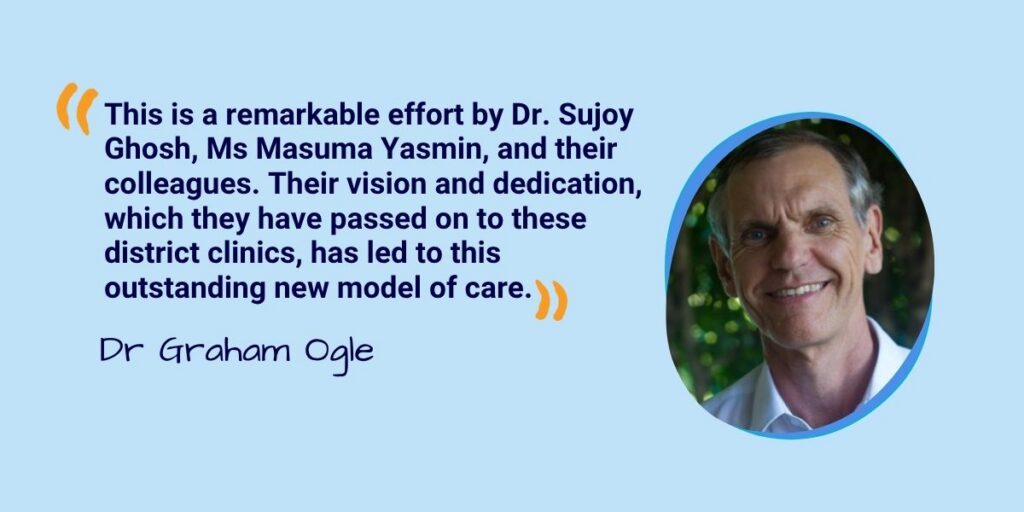
Led by Dr Sujoy Ghosh, Ms Masuma Yasmin and colleagues, a government-led model of care has achieved remarkable results for children and young people living with type 1 diabetes and created an important example of what is possible through public health systems.
We are thrilled to see this work, and the team behind it, recognized through the publication of the West Bengal Model of Care in Diabetic Medicine, see the abstract here.
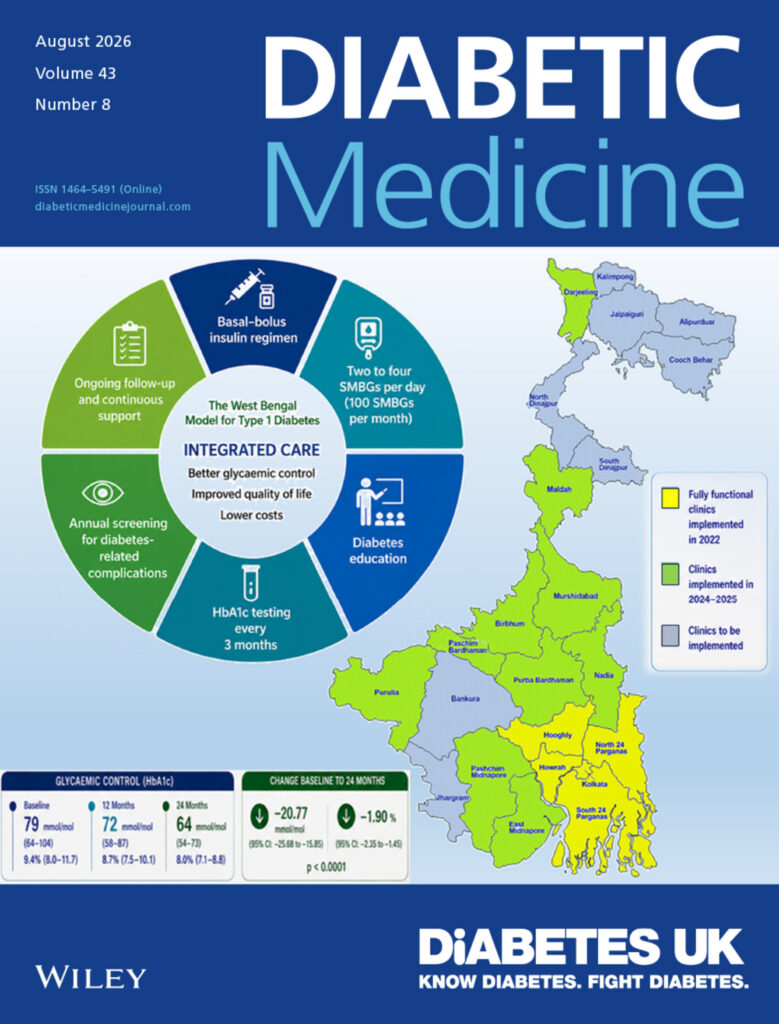
The West Bengal Model demonstrates that high-quality type 1 diabetes care can be delivered through government secondary-level health services, even in resource-constrained settings. The model achieved significant improvements in glycaemic outcomes, psychological wellbeing and affordability of care for children and young people living with type 1 diabetes.
Importantly, the model was built on the concept of “Intermediate Care” developed by Life for a Child and was informed by technical advice from Life for a Child General Manager Dr Graham Ogle.
The results speak for themselves. Over 24 months, HbA1c levels improved significantly, there were no episodes of diabetic ketoacidosis, no hospital admissions and no deaths among study participants. Family out-of-pocket costs also fell dramatically.
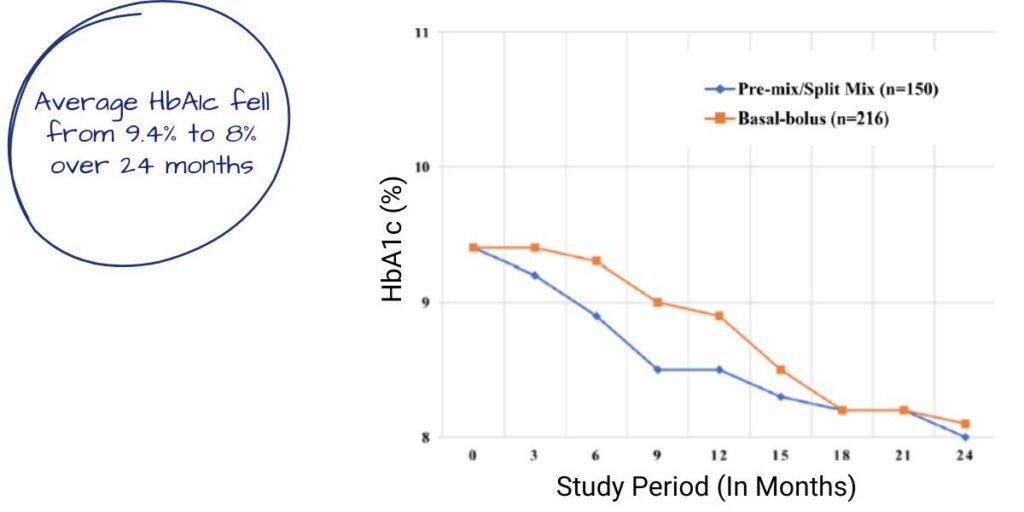
These results are impressive in their own right. Their significance becomes even clearer in the context of India.
India is home to the largest population of children and young people living with type 1 diabetes in the world. Life for a Child has worked alongside clinics and partners across India for many years, helping thousands of children access insulin, diabetes supplies, education and support.
The West Bengal Model demonstrates that a government-funded and government-operated program can successfully deliver structured type 1 diabetes care at scale. The model has since expanded across West Bengal and now serves around 1,500 people living with type 1 diabetes.
At the same time, India has taken important steps to recognize childhood diabetes within national policy initiatives.
Policy commitments alone do not change lives. Implementation, funding, workforce development and sustained leadership are what matter most. But every major transformation begins with evidence that something can work.
That is why the West Bengal story matters so much.
For Life for a Child, this is what success looks like: local champions leading change, governments investing in sustainable care, and children and young people with type 1 diabetes receiving the support they need close to home.
Congratulations to Dr Sujoy Ghosh, Ms Masuma Yasmin and the entire West Bengal team. We are cheering you on.