HomeNewsUncategorizedNew US T1D data: what it reveals and why we’re looking
New US T1D data: what it reveals and why we’re looking
Some US states have six to eight times more pediatric endocrinologists per child with type 1 diabetes than others. Here's why that matters for the US and beyond.
By Emma Klatman, September, 2026
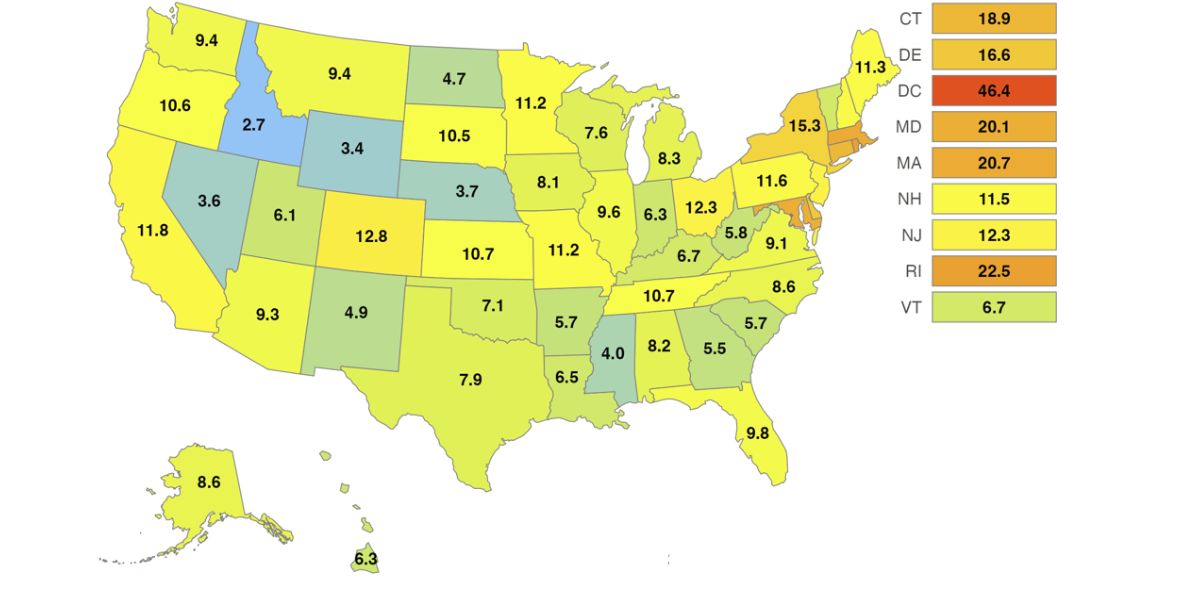
Pediatric endocrinologists per 1,000 prevalent cases, 2024
A new study by Wang et al using the T1D Index provides the most detailed picture yet of how type 1 diabetes is distributed across the United States, revealing significant differences between states in prevalence, incidence and specialist workforce capacity.
At first glance, that may not seem like Life for a Child’s story to tell.
Life for a Child is known for its work in low- and middle-income countries, where children and young people with type 1 diabetes continue to face challenges such as delayed diagnosis, shortages of trained healthcare professionals, limited access to supplies and avoidable deaths.
So why would Life for a Child contribute to a study examining type 1 diabetes in the United States?
Because this study is about more than how many people are living with type 1 diabetes. It is about understanding how experiences differ within a country, and whether healthcare resources are aligned with need.
Life for a Child works to reduce disparities in diabetes outcomes around the world. While the challenges facing children and young people in the United States are very different from those facing children in lower-resource settings, the underlying question is remarkably similar: does where you live influence the care and support available to you?
This study suggests that it does.
The United States Doesn’t Have One Type 1 Diabetes Story
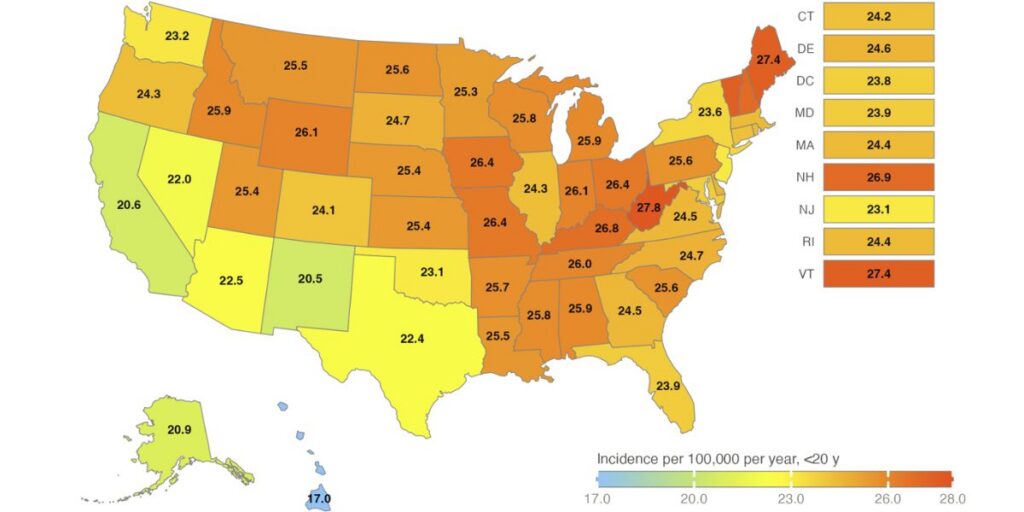
Estimated new cases per 100,000 per year among young people 0-19 years of age.
One of the study’s most prominent findings is the extent of variation between states.
Incidence among children and adolescents ranged from 17.0 new cases per 100,000 young people annually in Hawaii to 27.8 in West Virginia. The number of children and young people living with type 1 diabetes also differed considerably across the country. Incidence is lower across the West and South-West, and higher across the Midwest and North-East.
These differences remind us that national averages can mask important local realities. Understanding where type 1 diabetes is most common, where incidence is increasing most rapidly and how access to specialist care varies between communities is essential for ensuring that children, young people and families receive the support they need.
Specialist Care Is Not Distributed Evenly
The study did not stop at estimating how many children and young people are living with type 1 diabetes. It also examined the distribution of pediatric endocrinologists relative to the number of children and young people living with the condition.
The findings revealed substantial differences between states.
Some states had approximately 2.7 pediatric endocrinologists per 1,000 children and adolescents living with type 1 diabetes, while others had more than 20. Excluding Washington DC, some states had six to eight times more specialist workforce capacity relative to the population of children and young people living with type 1 diabetes than others.
The study does not suggest that every state should have identical workforce ratios. It does show that where children and young people live may influence the specialist expertise available to support them.
This is the aspect of the study that resonates most strongly with Life for a Child. While the challenges facing the United States are very different from those in lower-resource settings, the underlying question is familiar: are healthcare professionals, services and support available where they are needed most?
In lower-resource settings, the gaps can be far starker. Until 2024, Burkina Faso, a country of more than 24 million people, did not have a single qualified pediatric endocrinologist. That changed when Dr Yempabou Sagna, who works with Life for a Child there, qualified in the specialty.

Specialists are only one part of the picture, but the stakes are clear: the T1D Index estimates that a 10-year-old diagnosed with type 1 diabetes in Burkina Faso can expect to live around 14 more years, compared with 57 in the United States.
Nearly 197,000 Children and Young People Are Living with Type 1 Diabetes in the US
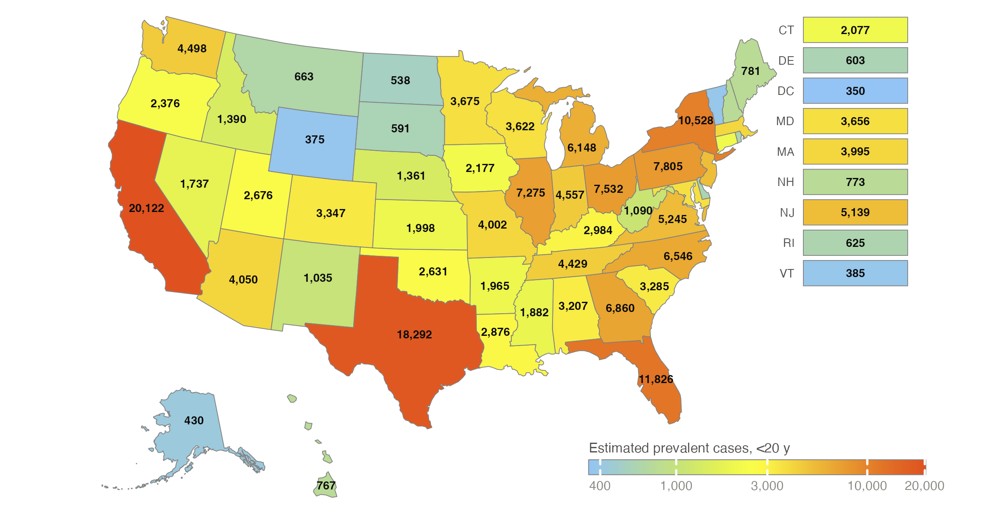
T1D incidence in children and adolescents, by state.
The scale of type 1 diabetes in the United States remains significant.
Nearly 197,000 children and young people under the age of 20 are estimated to be living with type 1 diabetes. Across all age groups, the estimate exceeds 1.47 million people.
Importantly, the study also found that 87% of people living with type 1 diabetes in the United States are adults. While type 1 diabetes is often discussed in relation to children and adolescents, these findings reinforce that it is a lifelong condition affecting people throughout adulthood as well.
These figures help quantify the scale of type 1 diabetes nationally. They also highlight the importance of ensuring that people living with type 1 diabetes have access to the care, support and specialist expertise they need throughout their lives.
Type 1 Diabetes Is Continuing to Grow
The study found that median state incidence among children and adolescents increased by 25% between 2003 and 2024.
The increase itself is important. But equally important is understanding where that growth is occurring.
A national trend can tell us that type 1 diabetes is becoming more common. Looking at the data state by state provides a more nuanced picture, revealing where incidence is rising fastest and where more children, young people and families will need access to diabetes care and specialist support in the years ahead.
For health systems, policymakers and healthcare providers, understanding those trends is critical. Growth in the number of people living with type 1 diabetes means more children, young people, adults and families will need access to insulin, healthcare professionals, diabetes education and ongoing support throughout their lives.
What This Means for the T1D Index
For many years, the T1D Index has helped answer fundamental questions. How many people are living with type 1 diabetes? Where do they live? How is type 1 diabetes changing over time?
This study reflects the next stage of that work.
It moves beyond national estimates and towards a better understanding of how type 1 diabetes varies within countries, where healthcare resources are located and whether access to specialist expertise aligns with the needs of the people living there.
In other words, it starts asking not just how many people are affected, but what those numbers mean for people, families and the healthcare professionals supporting them.
Looking Beyond National Averages
This study provides the most detailed picture to date of type 1 diabetes among children and young people in the United States, revealing important differences between states in incidence, prevalence and specialist workforce capacity.
Those findings do not mean that the United States faces the same challenges as the countries where Life for a Child works. They do, however, reinforce a lesson that applies everywhere: national statistics are only the starting point.
Understanding how many people are living with type 1 diabetes is essential. Understanding how experiences differ between communities, regions and health systems helps identify inequities, guide planning and inform action.
Developed through the ongoing collaboration between Breakthrough T1D, Life for a Child and partners across the global diabetes community, the T1D Index was created to improve understanding of type 1 diabetes worldwide. This study demonstrates the value of looking beyond national estimates to reveal patterns and disparities that might otherwise remain hidden.
As the T1D Index continues to evolve, studies like this will help build a more complete picture of type 1 diabetes, not just between countries, but within them. By examining differences at state, regional and community level, we can better understand where people are living with type 1 diabetes, the care and support available to them, and where gaps may remain.
For Life for a Child, that is ultimately why this work matters. Better understanding is the first step towards greater equity, and towards ensuring that everyone living with type 1 diabetes has access to the care and support they need, wherever they live.