When Dr Albert Kalehezo joined the Life for a Child Mentorship Program, he hoped to deepen his clinical expertise. Six months later, he had gained a mentor and friend, as well as unexpected inspiration for a song.
Emma Klatman & Rachel Clayton, September 2026
As founder and director of a diabetes center in the Democratic Republic of Congo (DRC), Dr Albert cares for children and young people, conducts research, and advocates for access to insulin.
“I am a medical doctor with general knowledge of diabetes, but I initially had very limited exposure to pediatric care,” Dr Albert said. “I sought opportunities to strengthen my skills so I could provide optimal care for children living with diabetes.”
That search led him to the Life for a Child Mentorship Program, delivered in partnership with the International Society for Pediatric and Adolescent Diabetes (ISPAD). Through the program, Dr Albert was paired with Dr Nader Kasim, a pediatric endocrinologist based in Michigan, USA.
Over six months, the pair met regularly to discuss clinical cases, solve problems, and explore practical approaches to improving care for children and families living with type 1 diabetes.
An unexpected outcome
One challenge kept coming up in Dr Albert and Dr Kasim’s sessions together: how could young people carry the sense of empowerment they found in the clinic home with them, and remember what mattered most once they got there?
Dr Albert’s answer was unexpected.
He wrote a song.
‘Insulin, My Best Friend’, performed by Dr Albert, Hervé, Glad, Dr Ignace, Faida, and Dieu-Merci.
The song turns diabetes education into lyrics that children and families can easily remember. Set to a catchy melody, it reinforces key messages about taking insulin consistently and managing diabetes safely.
“Taking my insulin every day, it’s what keeps me alive,” the song reminds listeners.
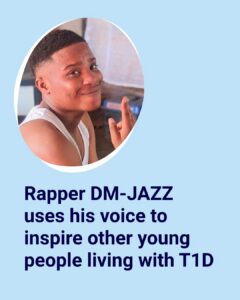
The song was brought to life by musicians from the local community, including choir leaders Hervé and Glad, physician Dr Ignace, medical student and Kivu Diabetes Center volunteer Faida, and young rapper Dieu-Merci, known as DM-JAZZ.
DM-JAZZ has lived with type 1 diabetes for seven years. After a period without insulin led to diabetic ketoacidosis and caused him to miss an important exam, support from Kivu Diabetes Center helped him return to his studies and gain his diploma. Through Life for a Child, he now has access to insulin, and glucose monitoring supplies. He uses his music to encourage other young people living with diabetes.
For Dr Albert, music was a natural way to make diabetes education engaging and memorable. Alongside his medical work, he is an organist and pianist and coordinates a music festival.
“Here in Africa, particularly among children, words learned through music can stay with us for many years,” Dr Albert said. “Music has a unique ability to make information memorable, understandable, and emotionally meaningful.”
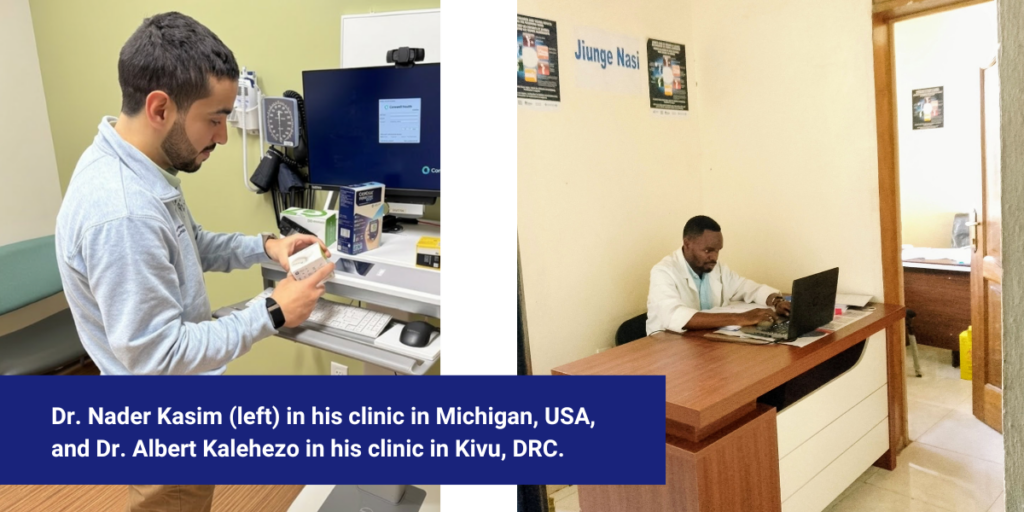
Dr Albert and Dr Nader also worked on other practical ways to improve care, as Dr Nader explains:
“Over our six months working together, my focus was helping Dr. Albert translate standard diabetes guidelines into practical, effective care for his patients,” Dr Nader said.
Together, they adapted clinical protocols to fit local realities. Dr Albert began teaching families how to adjust insulin doses based on meal size, categorized as large, medium, light, or small. They strengthened protocols for managing diabetic ketoacidosis and explored new ways to share diabetes education through group messaging and recorded videos.
“Many concepts that once felt abstract became clear,” Dr Albert said. “Dr Nader understood my working environment very well.”
A lasting connection
For both Dr Albert and Dr Nader, the experience delivered far more than updated clinical knowledge.
“Seeing Dr Albert’s clinical confidence grow has reinforced the immense value of sharing medical knowledge,” Dr Nader said. “I stepped into this program hoping to offer useful guidance, but I am walking away having gained an exceptional colleague and a true friend.”
Dr Albert agrees.
“Beyond mentorship, I gained a friend whom I can still contact for advice,” he said.
“We both hope to meet in person one day.”
While the formal mentorship has ended, its impact continues through the children and families receiving care at Dr Albert’s clinic. And through a song that helps make life-saving diabetes lessons a little easier to remember.
Are you an experienced health professional working in paediatric or young adult diabetes care and interested in becoming a mentor? Visit our Mentorship Program page to learn more about the program and how to get involved.